
Don't Let Winter Win: How Proper Attic Ventilation Prevents Ice Dams on Your Ottawa Roof
Every Ottawa homeowner knows the feeling. The snow falls, creating a beautiful winter landscape, but with it comes the worry of what’s happening on the roof. One of the most destructive winter phenomena for homes in our region is the formation of ice dams. Those long, sparkling icicles hanging from your eavestroughs might look pretty, but they often signal a serious problem that can lead to water damage, ruined insulation, and costly repairs. While many people think ice dams are just an unavoidable part of a harsh Canadian winter, the truth is they are usually a symptom of a bigger issue: poor attic ventilation. In this guide, we’ll explain what causes ice damming and how a balanced attic ventilation system is your home's best defense.
The Anatomy of an Ice Dam
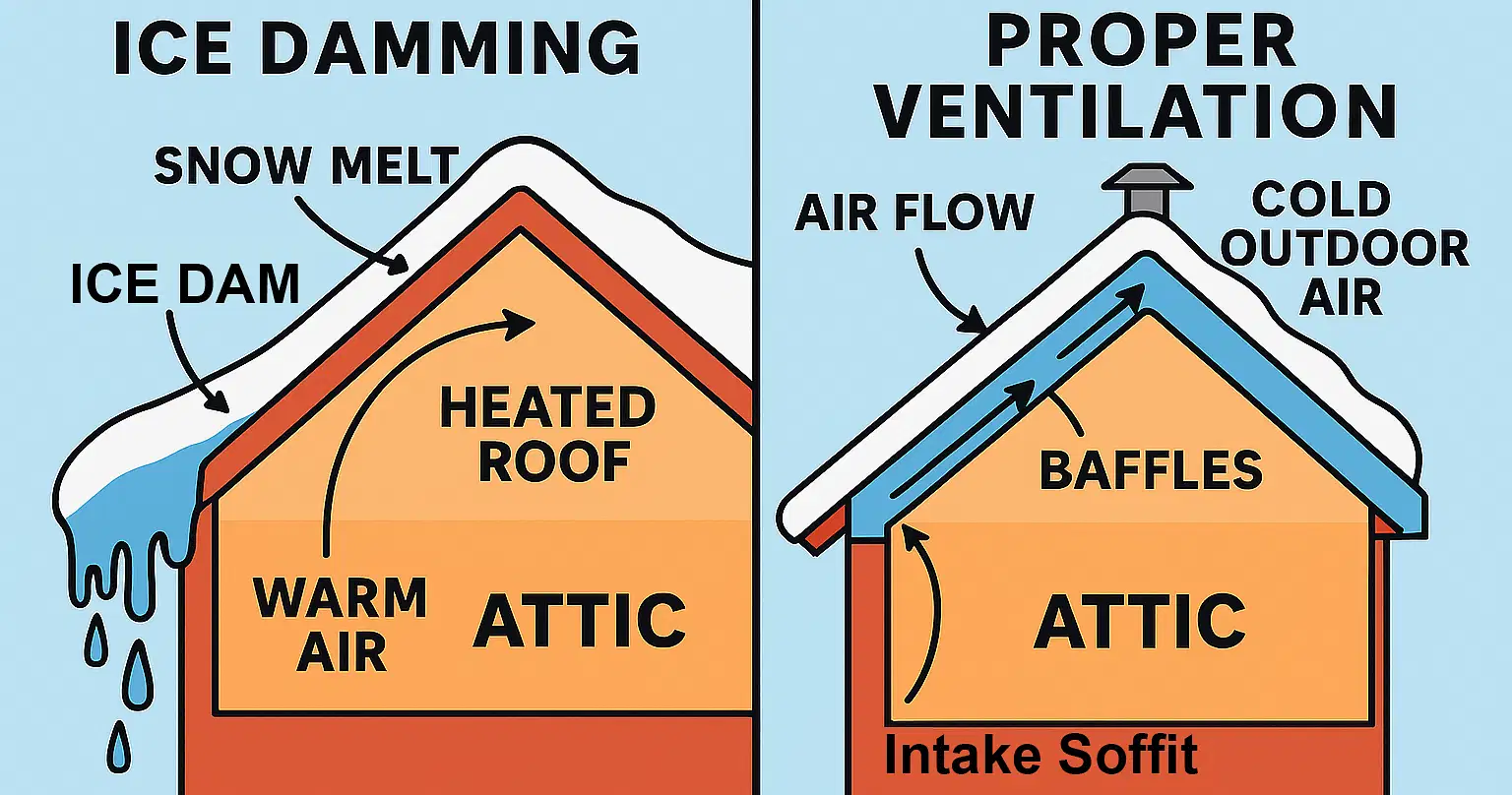
Before we can solve the problem, it's important to understand how an ice dam forms. It’s a chain reaction that happens when the surface of your roof is uneven in temperature.
- Heat Escapes: Heat from your home’s living areas rises and escapes into the attic. If the attic is poorly insulated or sealed, this effect is magnified.
- Snow Melts: This trapped heat warms the underside of your roof deck, causing the snow on top of the roof to melt, even when the outside air temperature is well below freezing.
- Water Refreezes: The melted snow (water) runs down the slope of your roof until it reaches the cold edge—the eaves and eavestroughs—which are not heated by the attic. Here, the water refreezes, creating a small ridge of ice.
- A Dam is Formed: As more water flows down and freezes, this ridge grows into a thick, solid dam. Water then pools behind this dam, unable to drain properly.
- Water Intrusion: This standing water has nowhere to go but up. It seeps back underneath the shingles, which are designed to shed falling water, not to be submerged in it. The water can then penetrate the roof deck and leak into your attic, exterior walls, and ceilings, causing significant damage.
This entire process is driven by a warm attic, which is precisely what proper ventilation is designed to prevent.
Your Home's Breathing System: How Ventilation Works
A properly ventilated attic acts like a breathing system for your home, keeping it cool and dry year-round. The goal is to maintain an attic temperature that is as close to the outside temperature as possible. This is achieved through a balanced system of intake and exhaust.
- Intake Vents (Soffits): Cool, dry air is drawn into the attic through vents located in your soffits (the underside of your roof’s overhang). This is the crucial first step. Without adequate intake, the exhaust vents can't function properly.
- Exhaust Vents (Ridge or Roof Vents): As the cool air enters, it pushes the warmer, more humid air that has risen inside the attic out through exhaust vents located at or near the roof's peak.
This continuous airflow prevents the roof deck from heating up and melting the snow on top. By keeping the entire roof surface consistently cold, the snow melts naturally in the spring, rather than being forced to melt by escaping heat from your home. As experts in Ottawa's unique climate challenges, we know that ensuring proper attic ventilation is one of the most critical steps in making a roof truly winter-ready.
Telltale Signs of Poor Attic Ventilation
How can you tell if your home’s ventilation system isn’t performing as it should? The signs can be subtle, but they often appear both in winter and summer.
Winter Warning Signs:
- Obvious Ice Dams: The most apparent sign is the formation of thick ice ridges along your eaves.
- Excessive Icicles: While some small icicles are normal, an abundance of large, thick ones indicates that a lot of water is melting and refreezing.
- Frost in the Attic: If you peek into your attic on a cold day and see frost on the underside of the roof sheathing or on the nails, it’s a clear sign that warm, moist air is being trapped.
Summer Warning Signs:
- Hot Upper Floors: An attic without proper airflow can become superheated in the summer, making the rooms below uncomfortably warm.
- Premature Shingle Aging: This intense heat can essentially “cook” your asphalt shingles from the inside out, causing them to curl, crack, and degrade much faster than their expected lifespan.
- Increased Cooling Costs: Your air conditioner has to work overtime to combat the heat radiating down from the attic, leading to higher energy bills.
If you notice any of these signs, it's a good indication that your attic's airflow needs a professional assessment.
Achieving Balance: The Role of Soffit and Fascia
Often, the root cause of poor ventilation isn't a lack of exhaust vents, but rather blocked or insufficient intake vents. Your soffits are the key to letting fresh air in. Over time, soffit vents can become clogged with dust, debris, or insulation. In some older homes, they may be too small or non-existent.
This is why a comprehensive approach is essential. It’s not just about adding more vents; it’s about creating a balanced system where the amount of air coming in equals the amount of air going out. This includes ensuring your soffits are clear and functional. The fascia—the board that runs along the roofline—is also critical as it supports the soffits and eavestroughs.
At Aquila Roofing, our inspections go beyond just the shingles. We assess the entire roofing system, including the condition of your soffit and fascia, to ensure every component is working together to protect your home. Whether it requires a simple cleaning, a repair to damaged sections, or a full ventilation system upgrade, addressing the airflow is fundamental to a roof's long-term health.
Protect Your Home This Winter
Ice dams are more than just a winter nuisance; they are a serious threat to the structural integrity and value of your home. The best way to fight them is not with hammers or harsh chemicals after they’ve formed, but by preventing them from forming in the first place. A professionally installed, balanced attic ventilation system is the most effective, long-term solution to keep your roof cold, your attic dry, and your home safe from water damage.
Don't wait for the next heavy snowfall to wonder if your roof is protected. If you've struggled with ice dams in the past or recognize any of the warning signs of poor ventilation, it's time to take action. Contact the experts at Aquila Roofing and Construction Inc. today. We provide comprehensive roofing and ventilation assessments to ensure your Ottawa home is ready for whatever winter throws its way. Request your free quote and enjoy true peace of mind this season.